I used to rush through mornings with a coffee in one hand and pets circling my feet, and the whole house felt a little on edge. We did not have any kind of calm pet routine, so my cats and dogs were trying to figure out what was happening next, and honestly, so was I.
Little by little, I realized they did not need a “perfect” schedule. They just needed a simple, steady rhythm they could count on. Once I built a calm daily routine, everyone relaxed. Health improved, anxiety eased, and our home started to feel softer and more inviting.
In this guide, I will walk you through an easy daily plan that gives your pets:
- A kinder morning reset that sets a gentle tone
- Predictable meals and stress-friendly activity
- Short mental work, a relaxed daytime setup, and an easy evening wind down
Every animal is different, especially rescues and seniors, so treat this as a flexible framework, not a strict rule book. No guilt here, just small tweaks you can layer in over time.
To get you started, here are three tiny upgrades you can try today:
- Pick anchor times for meals and walks
- Set up fresh water spots around the house
- Plan one 15 minute enrichment block
Some of the links in this post are affiliate links for pet products. This means I may earn a small commission if you shop through them, at no extra cost to you. Thank you for supporting HypeVine and helping me keep the cozy pet ideas coming!
Key Takeaways
- Routines help your pets feel safe, relaxed, and less on edge.
- A simple daily plan (not a perfect one) is more than enough.
- One short enrichment break a day can shift behavior in a big way.
- Tiny tweaks around the house can make everything feel softer and more inviting for you and your pets.
- Adjust the routine for seniors, rescues, and different energy levels so it fits the animals you actually live with.

Set the tone with a calm pet routine that helps pets feel secure
When your pets know what is coming next, everyone relaxes a little. A few gentle signals in the day tell them, “You are safe, you are cared for, and your needs are handled.” That alone can soften a lot of anxious energy.
I noticed a big shift when I stopped chasing a perfect schedule and picked a small, honest one I could actually keep. Waking up around the same time, feeding on a simple pattern, and ending the day with the same little cues helped my pets settle faster. Those daily rhythms build trust, for them and for you.
Why routine lowers anxiety and supports better behavior
Animals spend a lot of energy trying to guess what is happening next. When life feels random, they can show it through whining, chewing, pacing, barking, or constant attention-seeking.
A steady routine removes some of that guessing. Predictable moments for food, bathroom breaks, play, and rest help their nervous system calm down. Less stress often means fewer “acting out” behaviors and more of the soft, easy moments you actually want at home.
Pick “anchor times” you can actually keep on busy days
Instead of planning every minute, choose a few anchor points in the day that stay mostly the same, even on hectic days. For example:
- Wake-up signal (a consistent 15 to 30 minute window)
- Meals (one simple, repeatable feeding window)
- Evening reset (lights down, quieter voices, less activity)
- Bedtime (roughly the same time most nights)
Use your real calendar, not a fantasy one. Notice what helps your pets feel secure, like the same walk route, the same general feeding time, or the same soft cue before bed. Small, steady choices are enough. You do not have to get it perfect for your pets to feel safer and more settled.
Create a calm morning rhythm for dogs and cats
Morning energy sets the tone for the whole day. When you start things in a softer, more predictable way, your pets pick up on it. They know what is coming, you feel less rushed, and the house feels calmer instead of chaotic.
You do not need a long routine here. Just a few small habits that repeat most mornings are enough.
Start with hydration and a quick body check
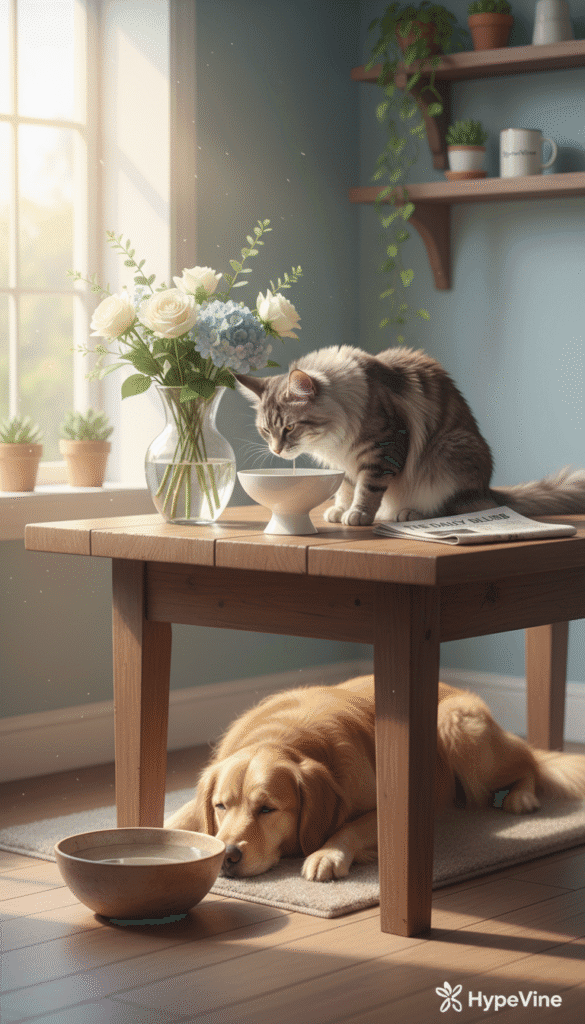
Begin with fresh water. Swap or refill bowls first thing so your pets get a gentle “good morning” cue and an easy chance to drink. A small pet fountain can encourage extra sips if your crew is picky about water.
While they drink, do a super quick body scan. Look for:
- Bright, clear eyes
- Ears that look clean enough
- A smooth coat without new bumps or sore spots
- A mood that feels normal for them
This takes less than a minute and helps you catch little changes before the day gets busy.
Dogs: relaxed potty break and a sniffy walk
For dogs, keep the first potty break calm and simple. Step outside, give them a moment to fully finish, and keep your voice soft. No big hype session yet.
If you have time, follow it with a short sniffy walk. Let your dog set the pace and spend extra time where they want to sniff. Smelling the world is real mental work for them, and it tires the brain without revving them up the way high-intensity play can.
Even 10 to 15 minutes of gentle walking and sniffing can take the edge off and make the rest of the morning feel easier.
Cat-friendly reset
For cats, think short, playful, and predictable. A few minutes with a wand toy can help them get out that first burst of energy in a healthy way.
After play, invite them up to a higher spot, like:
- A cat tree
- A window perch
- The back of a favorite chair with a small blanket
Vertical spaces help cats feel safe and in control. A simple pattern of “play a little, then rest somewhere up high” can keep the home quieter and more peaceful.
- Fresh water bowl or pet fountain (easy to clean)
- Poop bags with dispenser + an enzymatic cleaner for accidents
- Lint roller & grooming wipes
- Simple wand toy and small mat or tray by the door
If you like having a “pet station,” this is a great spot to add your favorite leash, harness, or treat pouch. Keep everything in one small area near the entry so you can grab it without thinking.
Your half-awake self will be very grateful, and your pets will quickly learn that this little corner means “morning care, movement, and attention” in the best way.

This tilted double bowl set makes mealtimes feel calmer and easier for your pets. You get side-by-side food and water with an automatic water bottle that keeps the bowl topped up, which is perfect for busy days. The slightly raised, angled design is gentle on small and medium pets, and the sturdy base helps keep everything from sliding around while they eat.
Build a calm pet routine for cats and dogs with predictable feeding
Feeding time is one of the easiest ways to help your pets feel safe. When meals show up in a simple, repeatable rhythm, the whole house settles. You will see less frantic pacing near the food bowl and more relaxed, “I know it is coming” energy.
You do not need a strict clock here. Just a consistent pattern your pets can recognize.
Why scheduled meals help everyone relax
Regular serving times give your animals a clear cue: “Food is coming, you are taken care of.” That lowers food-related anxiety, reduces begging, and supports smoother digestion.
When your pets are not worried about when they will eat next, they can rest and play more calmly. It also makes it easier for you to notice changes in appetite, which is a big part of staying on top of health.
Keep mealtimes simple: same windows, measured portions, fresh water
Pick one or two feeding windows that fit your real life, morning and evening, and stick close to those most days.
You can use a simple loop like this:
- Place bowls in the same spot
- Give a calm cue (like “time to eat”)
- Allow a 10–20 minute eating window
- Pick up bowls when they are done, if that works for your household
Refresh water at the same time so hydration stays effortless. Measured portions based on age, weight, and activity level help keep bodies comfortable and prevent slow weight creep from extra treats.
If you are unsure about exact amounts, this is a great place to peek at your food brand’s feeding guide or ask your vet for a quick range.
Treats in moderation and gentle, healthier swaps
Treats can absolutely stay. They just work best when they feel like small bonuses, not full extra meals.
A simple approach:
- Keep treats to about 10% (or less) of daily calories
- Use part of their regular kibble as training rewards when you can
- Choose lighter, single-ingredient options like carrot coins, green beans, or a bit of cooked chicken for dogs, and vet-approved snacks for cats
Breaking treats into tiny pieces stretches the moment without overloading their system. You still get all the joy and bonding without undoing the rest of your routine.
Create a calm feeding station you can keep tidy
- Easy-to-wash stainless steel or ceramic food and water bowls
- Slow feeder bowl for fast eaters
- Sealed pet food storage bin or canister
- Small waterproof feeding mat to catch spills
This is also a natural place to highlight your favorite bowls, food brand, or storage picks. When everything lives in one simple station and looks the same most days, your pets learn, “This is where and how we eat,” which is incredibly calming.
Even if the rest of the day feels a little wild, a steady meal rhythm quietly tells them, “You are okay here. Your needs are met.”


Daily exercise in a calm pet routine that reduces stress
Movement does not have to be intense to make a big difference. Gentle, predictable activity helps your pets relax, sleep better, and stay out of trouble, without turning the evening into a zoomie fest.
I like to think of daily movement as “just enough” instead of “as much as possible.” Short, steady bursts are usually all they need.
Gentle movement ideas for dogs
Aim for activities that let your dog move, sniff, and explore, while keeping the mood calm and easy.
A few simple options:
- Easy neighborhood walk, 15–30 minutes at a relaxed pace
- Sniffy walk, where the goal is sniffing more than distance
- Short fetch rounds, 3–5 throws with a quiet pause in between
- Tug with clear start and stop cues so play ends calmly
- Low-key “home agility” with a few cones, boxes, or pillows to weave around
You do not have to do all of these. Pick one or two that fit your day and your dog’s age and energy level. On busy days, even a slower, sniff-centered walk can be enough.

Stay connected to your furry friend from anywhere with the Furbo 360 Dog Camera, the ultimate smart pet camera with treat tossing, 360° panning, and barking alerts. Use the app to talk, see, and reward your pup in real time — no subscription required. With HD video, night vision, and two-way audio, it’s peace of mind and playful bonding rolled into one.
Gentle play that fits your cat’s natural rhythm
Cats are built for short bursts of hunting, then rest. A few focused play sessions often work better than leaving toys out all day.
Try:
- Wand toy sessions for 5–10 minutes, letting them “catch” the toy at the end
- Laser play that finishes with a real toy or treat they can grab
- Climbing time on a cat tree, shelf, or window perch
- A tossed treat or toy up onto a safe surface to encourage a little jump and stretch
Let your cat choose the pace. When they slow down, groom, or wander off, that is usually a sign the session was long enough.
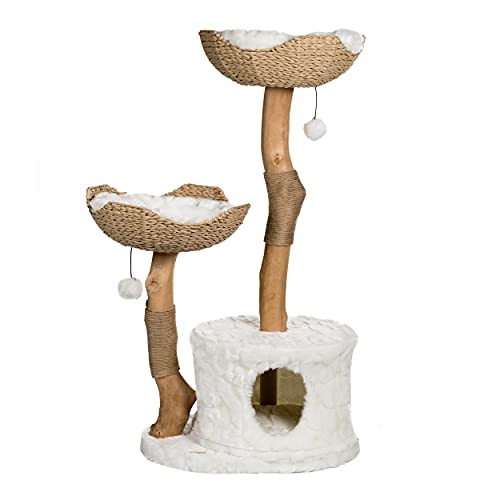
Upgrade your cat’s hangout spot with the Mau Lifestyle Modern Cat Tree Tower, crafted from real tree branches and natural materials. This stunning piece doubles as home décor, featuring cozy woven baskets, a plush hideaway, and sturdy sisal posts for scratching. Elegant, durable, and eco-friendly — it’s the ultimate luxury cat condo for modern pet parents.
Read their energy, not a strict schedule
Watch how your pets feel after activity:
- Tired and content is the goal
- Wired, pacing, or extra mouthy means it might have gone a bit too long or too intense
On bad-weather or super busy days, you can swap outdoor time for:
- Hallway fetch
- A few laps up and down safe stairs
- Short sniff games or scatter feeding
Think of daily exercise as a light reset button. A little bit most days helps melt tension, supports better sleep, and keeps behavior steadier without asking you to become a full-time trainer.
Calm pet routine ideas for mental stimulation and stress relief
A little brain work goes a long way. When pets have something simple and interesting to do, they spend less time inventing trouble and more time relaxing.
Think of mental stimulation as a tiny daily puzzle or game. It can be short, light, and fun, not another big project on your to do list.
Easy enrichment ideas you can fit into 10–15 minutes
You do not have to do all of these. Rotate one or two that feel realistic for your day and your pets.
- “Find it” game: Hide a few tiny treats around a room and let your dog or cat sniff them out. Start easy, then make hiding spots a little more interesting over time.
- Short cue practice: Do a few sits, downs, stays, or simple tricks with tiny rewards. Keep it playful and end on a win.
- Puzzle feeding: Use a treat ball, snuffle mat, or even a towel with kibble sprinkled inside so they can sniff and forage.
- Trick time: Teach something small like “spin,” “paw,” or “touch.” A few minutes a couple of times a week is enough to make progress.
- DIY sniff session: Sprinkle a small amount of kibble over a safe area of grass or a rug and let them hunt at their own pace.
You can tuck these into natural pockets of your day. While coffee brews. While a show is on. Right before you head out the door. Short and sweet is perfect.
Simple enrichment items to keep on hand
- Puzzle feeder or treat ball
- Snuffle or sniff mat and lick mat
- Cardboard scratcher or safe chew option
- A couple of small toys you can rotate in and out
- Low-calorie training treats or tiny cat treats
Safety note: always supervise new items at first and choose sizes that make it hard to swallow or break off pieces. If something seems frustrating instead of fun, put it away and try a simpler option.
Think of enrichment as a quality of life upgrade, not a chore. Even a few short games each week can mean less chewing, less attention barking, and a more settled, content energy in your home.

Make your home environment feel calm and predictable during the day
When you leave the house, your pets do not know if you will be gone for twenty minutes or several hours. A few gentle cues and supports can make the day feel safe and predictable, even while you are away.
Think of this as a simple “daytime script” for them. The goal is to send the same calm message every time you go and every time you come back.
Understand separation signs and what helps
Some animals handle alone time easily. Others show worry through pacing, drooling, barking, yowling, or chewing. A steady environment can soften a lot of that stress.
Helpful basics:
- Keep departures and arrivals calm and low key.
- Use thesame short phrase when you leave and when you return.
- Offer something relaxing to focus on, like a safe chew or puzzle toy, right as you head out.
- Give them a chance to potty and drink before you go, whenever possible.
If you notice new bathroom accidents, chewing, or intense distress when you leave, that is your cue to slow things down, add more support, or check in with your vet or a trainer.
Easy leaving routine that reduces stress
You do not need a long checklist here. A simple, repeatable pattern is enough.
Right before you step out:
- Refresh water in a clean bowl or fountain.
- Set out one safe enrichment option, like a stuffed chew, puzzle feeder, or sniff mat.
- Turn on soft background sound, such as a radio, fan, or pet playlist, at a low volume.
- Use the same short goodbye phrase and keep your body language calm and steady.
When you come home, greet them, let them potty if needed, then quietly put toys away so they stay a little special for next time.
Daytime support options for longer stretches alone
If you are gone for longer days, a bit of extra help can make everyone more comfortable.
You might:
- Ask a trusted neighbor, friend, or sitter to stop by for a quick check in.
- Schedule a midday walk or potty break for dogs.
- Use a small camera so you can peek in and notice when they nap or seem restless.
- Try a daycare day once in a while for social dogs that truly enjoy it.
You do not have to use every option. Even one or two small supports can make the day feel more manageable for your animals.
Friendly note: this is also a natural place to keep your favorite daytime helpers, like cameras, sound machines, interactive feeders, or puzzle toys you love.
When the environment feels predictable, your pets learn that alone time is just another normal part of the day, and that you always come back.
Evening wind-down: bonding, grooming, and calm care
Evening minutes together can turn basic care into a quiet, meaningful ritual.
I make this a soft, low-energy block of time. Think snuggles, slow brushing, and gentle praise. This helps nerves settle and boosts our connection.
Grooming as connection time plus a simple skin/ears/eyes check
Slow brushing is a massage that reveals lumps, rashes, or tender spots. Use short sessions and praise often.
Check ears, eyes, and skin each night so early signs of trouble show up before they worsen.
Hygiene habits that fit into real life
Quick brush a few nights weekly. Paw wipes after messy walks. Tooth care when you can—dental chews or a brief brush helps long-term health.
Keep sessions short. Stop before they get fed up. Treat breaks make this feel like quality time.
Shopping list for a low-stress grooming and care kit
- Soft brush or comb
- Pet-safe wipes and cotton rounds
- Enzymatic cleaner and nail trimmers
- Styptic powder and gentle pet shampoo
- Dental chews or dental treats for cats
Tip: Keep brush, dental chews, or a calming spray near the entry or feeding area so grabbing them is effortless.
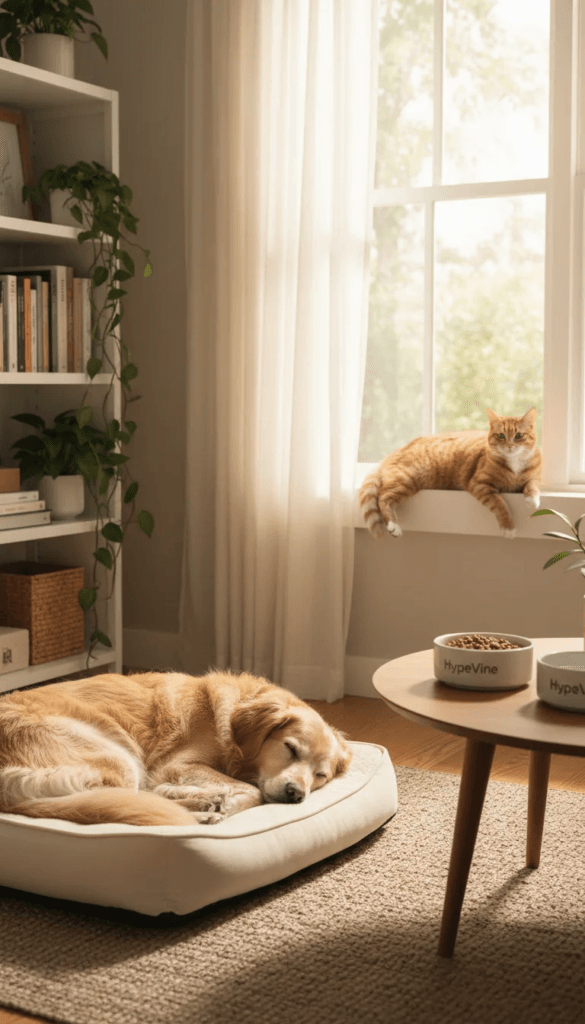
Protect sleep and recovery with a cozy, quiet bedtime routine
Good sleep is where everything resets. Bodies repair, nervous systems calm down, and all the little moments of the day finally land. Most dogs need around 12–14 hours of sleep in a full day, and many cats can reach 16, so a gentle bedtime rhythm is a bigger deal than it looks.
Think of your evening as a slow, predictable slide into rest. The goal is not perfection, just a soft, repeated pattern that tells your pets, “The busy part is over, it is safe to relax now.”
Simple bedtime checklist you can repeat most nights
You do not need an elaborate routine here. A few small steps done in the same order are enough.
Right before bed:
- Do a final potty break for dogs or a quick litter check for cats.
- Refresh water in a clean bowl or fountain.
- Tidy obvious toys so things feel calmer and less stimulating.
- Lower the lights and keep voices softer and slower.
- Offer a last round of gentle affection, then let them settle in their sleep spot.
Use the same short cue each night, like “bedtime” or “time to rest.” Over time, that phrase becomes a calming signal all by itself.
Set up a restful sleep space that feels safe
A good sleep spot does not have to be fancy, just predictable and comfortable.
For dogs, try:
- A supportive, washable bed in a quieter corner of the room.
- A crate with a light cover if they love den like spaces.
- One soft blanket that smells like you, especially for anxious pups.
For cats, think:
- A tucked away cushion, cave bed, or basket in a low traffic corner.
- A higher perch or shelf for those who rest best when they can oversee the room.
- Separate options from dogs or other pets if they prefer their own space.
In multi pet homes, aim for:
- Separate sleeping spots and separate chews or comfort items.
- Clear, predictable places so nobody has to compete for the “good” bed.
The goal is that each animal has at least one place that reliably feels like “their spot” every night.
Keep timing gentle, not rigid
You do not have to hit the same minute every night. A simple window is enough.
- Pick a general bedtime that fits your life most days.
- Start your wind down steps about the same time each evening.
- Avoid rough play or big excitement right before bed when you can.
Over time, their bodies and brains learn this pattern. You will start to notice yawns, stretching, and quiet wandering toward their beds as the evening routine kicks in.
Sleep is a quiet superpower for behavior and health. When your pets get steady, predictable rest, mornings feel easier, training feels smoother, and the whole house carries a softer, more relaxed energy into the next day.

Give your cat a cozy retreat that feels like their own private hideaway. This 2-in-1 cat cave bed doubles as a covered house and open lounger, perfect for both shy cats and confident nappers. The cushioned pillow adds plush comfort, while the anti-slip bottom keeps it securely in place. Designed to reduce stress and promote relaxation, it’s the ultimate calming nap spot for your feline friend.
Do simple weekly check-ins and know when to call your vet
A steady routine makes it much easier to notice when something is “off.” You do not need charts or a big tracking system. Just a simple weekly check and a few daily habits help you spot changes early and get support before things snowball.
Do a 5-minute weekly “how are we doing?” scan
Once a week, pause and look at the whole picture for each pet. Ask yourself:
- Eating: Are they finishing meals at their usual pace, or slowing down or leaving food?
- Energy: Do walks, play, or favorite games feel normal, or are they more tired or wired than usual?
- Mood: Do they seem more clingy, withdrawn, restless, or grumpy?
- Body: Any new lumps, sore spots, stiffness, or limping you have noticed during the week?
- Bathroom habits: Any changes in frequency, stool consistency, accidents, or litter box behavior?
You are not looking for perfection, just trends. A small change once is usually fine. Changes that keep repeating are worth paying attention to.
What to keep an eye on each day
Your daily rhythm naturally gives you plenty of chances to notice small shifts. While you feed, walk, scoop, or cuddle, quietly watch:
- Appetite and interest in food
- Water intake that suddenly jumps up or drops off
- Bathroom habits, including straining, loose stool, or strong smell
- Breathing that seems faster, louder, or more effortful than normal
- Sudden hiding, clinginess, agitation, or unusual vocalizing
When your routine is steady, these changes stand out more clearly and feel less easy to dismiss.
Monthly resets that support long-term health
Once a month, do a slightly deeper reset:
- Give nails, ears, and teeth a quick check and trim or clean what you comfortably can.
- Wash beds, blankets, and soft toys so their spaces stay fresh.
- Confirm flea, tick, and heartworm prevention is up to date if your vet has prescribed it.
- Gently feel along their body and notice any new bumps, weight changes, or flinches.
- Jot down anything small that feels “different” so you can mention it at your next vet visit.
These tiny habits make vet appointments feel more like routine tune-ups rather than big, stressful events.
When to call your vet or clinic
You know your animals better than anyone. If something feels off, it is always okay to call.
Reach out to your vet promptly if you notice:
- No interest in food for a full day, or a strong drop in appetite
- Repeated vomiting or diarrhea, especially with low energy
- Trouble breathing, open-mouth breathing in cats, or heavy panting at rest
- Sudden weakness, collapse, or wobbliness
- Pain signs like yelping, stiff movement, or refusal to be touched
- New swelling, wounds, or eye issues that look red, cloudy, or painful
For anything urgent, call immediately. For quieter concerns that linger more than a day or two, a quick call or message is still worth it. Most clinics would rather answer a small question early than manage a crisis later.
Small check-ins, paired with your calm daily routine, keep your pets’ needs visible and help everyone feel more supported and less overwhelmed.

Keep your home spotless and your pets perfectly groomed with the Neakasa P1 Pro Grooming Kit — a 5-in-1 vacuum-powered grooming system that captures up to 99% of pet hair. Featuring professional-grade clippers, deshedding and brushing tools, and quiet suction technology, it’s a must-have for dog and cat owners who want salon-quality results without the mess.
A softer, happier day with your pets
At the end of the day, your pets do not need a perfect schedule. They just need a simple rhythm they can trust. A calm morning reset, predictable meals, light movement, a few tiny brain games, a steady daytime setup, and a quiet bedtime routine all add up to a home that feels safe and easy to live in.
You do not have to change everything at once. Start small. Pick one anchor time, refresh water a little more often, or add a 10–15 minute enrichment block to the part of the day that feels the most chaotic. Watch how even tiny tweaks help your pets settle and how the house starts to feel a little softer around the edges.
Remember that the “right” routine is the one that fits the animals you actually live with. Adjust for seniors, rescues, shy cats, high energy dogs, and mixed households as you go. Your calm presence, plus a few predictable patterns, will do more than any complicated checklist.
Save this guide so you can come back to it when life gets busy or the energy at home feels a little off. Use it as a gentle reset anytime you want your days with your pets to feel more relaxed, connected, and full of good, quiet moments together.
🐶 Keep Exploring
Looking for more heartwarming stories and helpful tips for pet lovers? Explore our Pets page for inspiration, product finds, and thoughtful reads that celebrate life with furry friends.
Visit the Pets Page 🐾