
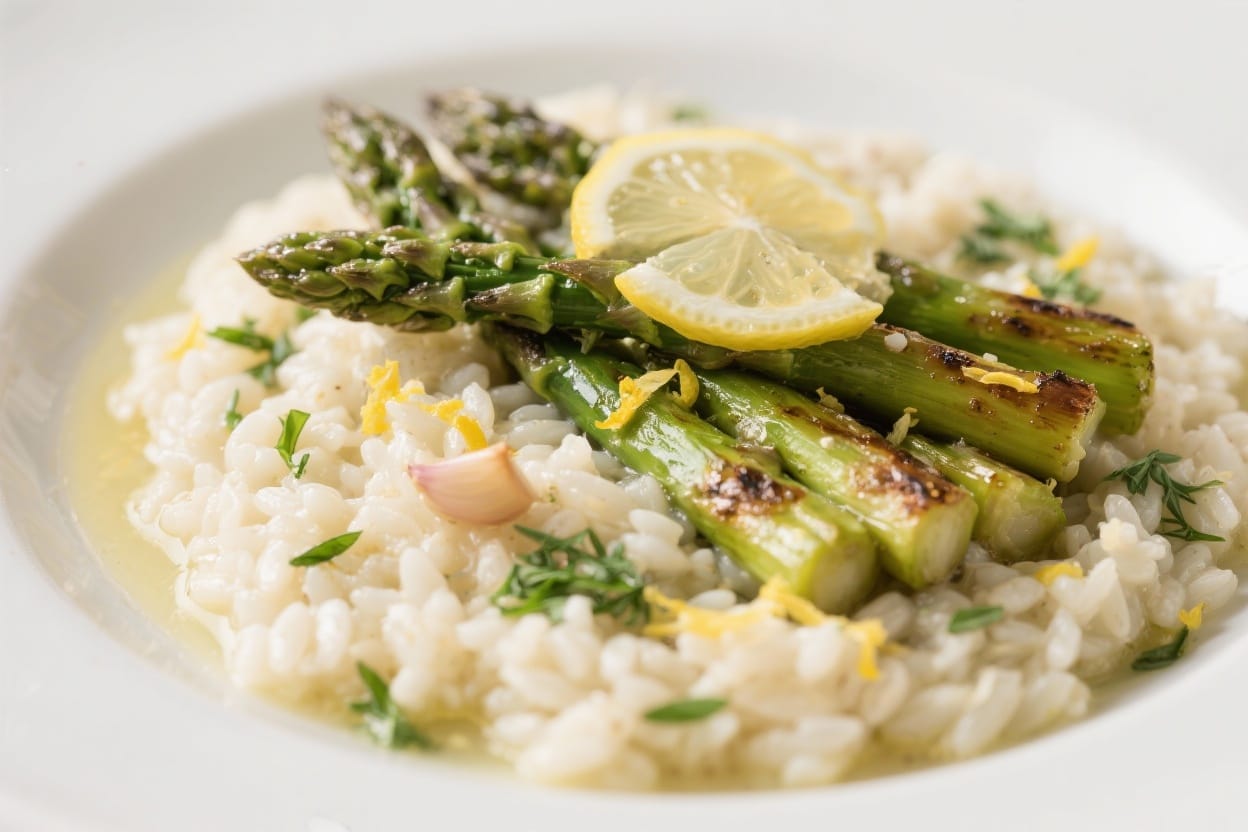
Creamy, Bright, and Satisfying
This lemon-herb risotto is one of those dinners that feels a little bit fancy, without asking you to spend all night in the kitchen. You get creamy, velvety rice, bright lemon, and roasted asparagus on top, so every bite tastes fresh and satisfying instead of heavy.
If you have ever been nervous about making risotto, you are in the right place. I will walk you through the whole process in simple steps, so you can stir, taste, and adjust as you go. No restaurant-level stress, just a gentle at-home cooking rhythm.
Everything here is fully vegan and naturally gluten free as long as you use gluten free vegetable broth. It is a beautiful option for:
- A date night in
- A spring or early summer dinner
- Meatless Monday or a simple feel-good bowl
Serve it as a main with a simple salad on the side, or pair it with a protein-rich side like crispy tofu, white beans, or roasted chickpeas. Either way, the lemon and herbs keep every bite bright and full of flavor.
What Makes This Special
This risotto hits that sweet spot between comfort food and something you would happily order at your favorite little bistro. It is creamy, but not heavy, and the lemon and herbs keep everything tasting fresh and light.
The arborio rice does most of the work for you. As it slowly simmers in warm broth, the natural starches release and create a silky texture, so you get that creamy feel without any dairy.
The roasted asparagus is where the flavor glow-up happens. Instead of cooking it in the same pot, you give it a quick roast in the oven, which:
- Adds a lightly toasted, almost nutty flavor
- Keeps the spears crisp-tender instead of limp
- Makes the finished bowls look extra pretty
I also love how flexible this recipe is. You can:
- Use white wine or skip it and add extra lemon
- Swap in different fresh herbs you already have
- Adjust the lemon to be more bright or more subtle
Although it tastes special, this is very weeknight-friendly. Once you get into the rhythm of adding a ladle of broth, stirring, and tasting, it becomes a calm, almost meditative kind of cooking. At the end, you have a big pot of lemony, herb-packed risotto that is completely vegan and gluten free.
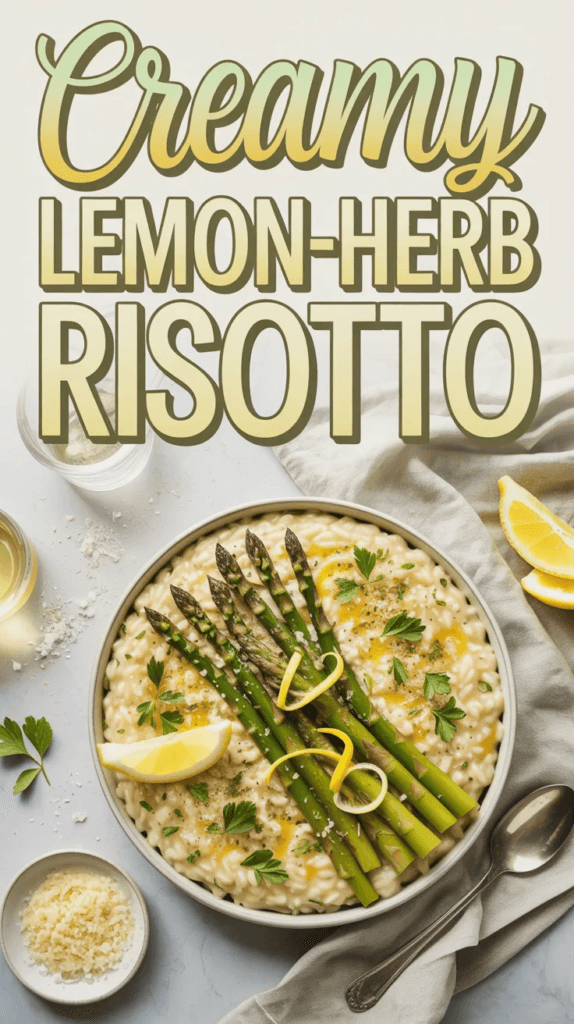
What You Will Need
Here is everything to grab before you start. I like to set it all out so the actual cooking feels calm and easy.
- Arborio rice (1 1/2 cups)
Classic risotto rice. It is short-grain and starchy, which is what gives you that naturally creamy texture. - Vegetable broth (5 to 6 cups), warmed
Keep this in a small pot over low heat so it stays hot. Use a gluten free broth if you need this to be fully gluten free. - Dry white wine (1/2 cup, optional)
Adds a little brightness and depth. You can skip it and use extra broth and lemon juice if you prefer no alcohol. - Asparagus spears (1 bunch, about 1 pound), trimmed
The star veggie. Roasting it on a sheet pan keeps it crisp-tender and a little toasty on the edges. - Lemon
You will use the zest of 1 large lemon plus 1 to 2 tablespoons of juice. This is what makes the whole dish taste fresh and lifted. - Garlic (3 to 4 cloves), minced
For that cozy, fragrant base flavor. - Shallot (1 large) or yellow onion (1/2 medium), finely chopped
Either works. Shallot is a little sweeter and more delicate, onion is a bit stronger. Use what you have. - Olive oil (3 to 4 tablespoons), divided
Used for roasting the asparagus and for starting the risotto. Choose an oil you like the taste of. - Vegan butter (2 tablespoons) or extra olive oil, for finishing
This adds richness and a silky finish at the end. You can use more olive oil if you prefer to skip vegan butter. - Vegan Parmesan-style cheese or nutritional yeast (about 1/4 to 1/3 cup), plus more for serving
This brings in that savory, cheesy flavor while keeping the dish dairy free. - Fresh herbs (2 to 3 tablespoons), chopped
Parsley, chives, and basil are all great here. Use one or a mix. - Salt and black pepper, to taste
You will season as you go, so keep these nearby. - Red pepper flakes, a pinch, optional
For a gentle little kick of heat on top if you like.

This is my personal go-to risotto rice when I want that silky, restaurant-style texture at home. The aged carnaroli grains stay tender yet slightly firm, and they soak up broth and lemon beautifully. Hands down the best risotto rice I have used at home when I want the texture to really shine.
Instructions
Use this step-by-step as your gentle guide and let the risotto slowly transform into a creamy, lemony bowl of comfort.
Preheat and prep
Heat the oven to 425°F (220°C). Pour the vegetable broth into a small pot and warm it over low heat. You want it to stay hot, not boiling, while you cook the rice.
Roast the asparagus
Place the asparagus spears on a baking sheet in a single layer. Drizzle with 1 to 2 tablespoons of olive oil, sprinkle with salt and pepper, and toss gently with your hands. Roast for 10 to 15 minutes, depending on thickness, until the stalks are tender and the tips are lightly browned. Set aside.
Sauté the aromatics
In a wide, heavy pot or deep skillet, heat 2 tablespoons of olive oil over medium heat. Add the chopped shallot or onion and a pinch of salt. Cook for 2 to 3 minutes until it looks softened and slightly translucent. Stir in the garlic and cook for about 30 seconds, just until fragrant.
Toast the rice
Add the arborio rice to the pot and stir to coat it in the oil and aromatics. Cook for 1 to 2 minutes, stirring often, until the edges of the grains look a little translucent. This helps the rice keep a nice bite later.
Deglaze with wine (or broth)
Pour in the white wine, if using. Stir slowly until most of the liquid has been absorbed, about 1 to 2 minutes. If you are skipping wine, add a ladle of hot broth here instead and stir it in.
Add the broth gradually
Add one ladle, about 1/2 cup, of hot vegetable broth to the rice. Stir gently and often until it is almost absorbed. Repeat this process, one ladle at a time, keeping the mixture at a gentle simmer. Adjust the heat as needed. This part will take about 18 to 22 minutes.
Check the texture and season as you go
Start tasting around the 16 minute mark. The risotto should be creamy and the rice should be tender with a slight bite in the center, not mushy. If it still feels too firm, keep adding broth and stirring. Taste for salt and pepper as you cook so the flavor builds slowly.
Finish with lemon, herbs, and vegan “cheese”
When the rice is just about where you want it, stir in the lemon zest, 1 tablespoon of lemon juice, and the chopped herbs. Add the vegan butter or a splash of extra olive oil along with the vegan Parmesan-style cheese or nutritional yeast. Stir until everything looks silky and glossy.
Taste and adjust with more lemon juice, salt, or pepper. If the risotto feels too thick, stir in another splash of hot broth until it gently flows off the spoon.
Plate and add the asparagus
Spoon the risotto into warm bowls. Arrange the roasted asparagus spears on top of each serving. Finish with a drizzle of olive oil, a sprinkle of extra vegan Parmesan or nutritional yeast, freshly cracked black pepper, and a pinch of red pepper flakes if you like a little heat.
Helpful Tools for Easy Risotto at Home
A few small upgrades can make risotto night feel way more relaxed:
- A wide, heavy pan or braiser for even, gentle cooking.
- A ladle for adding hot broth one scoop at a time.
- A silicone spoon or spatula that can sweep the bottom of the pan.
- A small pot to keep your vegetable broth warm on low heat.
- A microplane zester for super fluffy lemon zest.
- Herb scissors for snipping parsley or chives right over the pot.
- A rimmed baking sheet so the asparagus roasts instead of steaming.
- A few prep bowls so everything is measured and ready before you start.
Save this list for your next risotto night, and feel free to check out my favorite risotto pan below if you want to upgrade your setup.
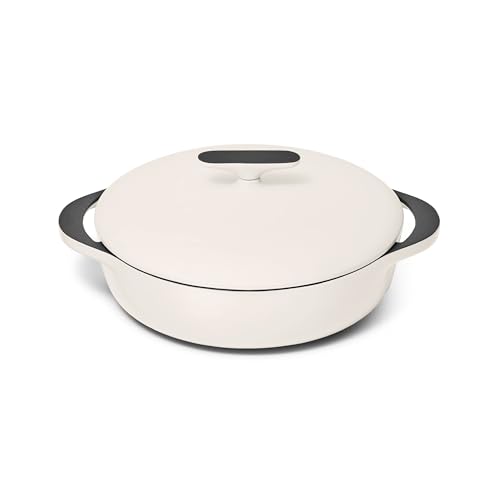
This 3.5-quart enameled cast iron braiser is the ultimate kitchen workhorse for plant-based cooking. Its wide base and high sides make it perfect for everything from searing crispy tofu to simmering hearty lentil stews and creamy pasta sauces. The non-toxic, triple-layer enamel finish ensures a natural non-stick surface that’s easy to clean, while the stunning design transition perfectly from stovetop to oven to tabletop. It's the one pan you'll never want to put away.
How to Store and Reheat Leftovers
Risotto is at its absolute best right off the stove, but leftovers can still be really good with a tiny bit of love.
- Let the risotto cool completely first.
- Transfer it to an airtight container and store it in the refrigerator for up to 3 days.
When you are ready to reheat:
- On the stovetop (best option):
Add the risotto to a small pot with a splash of vegetable broth or water. Warm it over low to medium-low heat, stirring often, until it loosens up and turns creamy again. - In the microwave:
Place the risotto in a microwave-safe bowl with a little broth or water. Cover loosely and heat on medium power in short bursts, stirring in between, until warmed through.
If it ever looks too thick, just add another small splash of liquid and stir. A drizzle of olive oil or a touch more vegan Parmesan-style cheese or nutritional yeast at the end can help bring back that glossy finish.
Why You Will Love This Recipe
- Comforting but still fresh
You get that creamy, spoonable risotto texture with bright lemon, fresh herbs, and roasted asparagus on top, so it never feels too heavy. - Naturally gluten free and fully vegan
Made with arborio rice and vegetable broth, this dish is gluten free as long as your broth is. Vegan butter and Parmesan-style cheese or nutritional yeast keep everything completely plant-based. - Weeknight-friendly but special enough for guests
The steps are simple and repeatable, so you can make this on a regular weeknight, but it also looks and feels special enough for a date night in or a small dinner party. - Flexible with what you have on hand
Swap the herbs, adjust the lemon, use wine or skip it, and add extra veggies if you like. The base recipe is strong, then you can play. - A gentle way to learn risotto
If you have wanted to try making risotto at home, this is a great starter recipe. The step-by-step method teaches you the rhythm of adding broth, stirring, and tasting, so you can use the same technique with other flavors later. - Seasonal and feel-good
Asparagus gives this a spring and early summer vibe, but you can easily rotate in peas, mushrooms, or other vegetables depending on what looks good at the store.
Common Mistakes to Avoid
Here are a few little things to watch for so your risotto turns out silky and dreamy every time.
- Using cold broth
If the broth is cold, it cools everything down and slows the cooking. Keep it warm in a small pot on low heat so each ladle blends in smoothly. - Rushing the broth additions
It is tempting to pour in a lot at once, but slow and steady really is the secret. Add one ladle at a time, stir, let it almost absorb, then add the next. This gentle rhythm is what builds that creamy texture. - Cooking over high heat
A strong boil can make the rice tough on the outside and mushy inside. Aim for a soft, steady simmer instead of a full boil. - Overcooking the asparagus
Roast the asparagus just until it is tender with a bit of snap left. If it goes too long, it can get soft and lose that pretty color. - Forgetting to taste and season
Taste as you go. Add small pinches of salt, pepper, and lemon until the flavors feel balanced and bright, not flat. - Adding vegan “cheese” too early
Stir in the vegan Parmesan-style cheese or nutritional yeast at the end, once the rice is done. This keeps the texture smooth instead of clumpy.
Easy Vegan Variations
Once you are comfortable with the base recipe, it is really fun to play with the flavors. Here are a few ideas to try.
- Pea and mint
Stir in about 1 cup of thawed peas during the last 3 minutes of cooking, then finish with a handful of chopped fresh mint. It feels very springy and bright. - Mushroom twist
Sauté sliced cremini or shiitake mushrooms along with the shallot or onion at the beginning. They add a cozy, earthy flavor that pairs so well with lemon. - Lemon-caper pop
Add 1 to 2 teaspoons of chopped capers with the lemon zest for a little briny, salty pop in each bite. - Extra-light and herby
Skip the vegan butter and use a drizzle of extra virgin olive oil at the end instead. Add more fresh herbs to keep it very light and green. - Plant-based protein boost
Stir in roasted chickpeas, white beans, or crispy tofu cubes right at the end for extra protein. They soak up the lemony, garlicky flavors so nicely. - Herb swap
Try tarragon, dill, or basil if you want to change up the vibe. These herbs are a little more assertive, so start with a small amount and add more to taste.
FAQ
Can I use a different rice?
For classic, creamy risotto, you really want a starchy, short-grain rice. Arborio is the easiest to find, but carnaroli or vialone nano can be even creamier. Long-grain rice will not give you the same texture, so it is not a great fit here.
Do I have to use wine?
No, you do not. The wine adds a nice little brightness, but you can absolutely skip it. If you leave it out, use extra vegetable broth in its place and add a bit more lemon at the end to keep that fresh, lifted flavor.
How do I know when the risotto is done?
Look for a texture that is creamy and flowing, not stiff. When you run a spoon through the pot, the risotto should slowly fill the gap again. Taste a grain or two. They should be tender with a slight, pleasant bite in the center, not crunchy and not mushy.
Can I make it ahead?
Risotto is at its best right after you make it, but you can partially prep it if you need to.
- Cook the risotto until it is about 75 percent done, the rice should still be quite firm in the center.
- Spread it out on a sheet pan to cool, then refrigerate.
- When you are ready to serve, add it back to a pot with hot vegetable broth and finish cooking until creamy.
- Stir in the lemon, herbs, vegan butter or olive oil, and vegan Parmesan-style cheese or nutritional yeast at the end.
What if my risotto is too thick?
No problem. Add a splash of hot broth or water, then stir over low heat until it loosens and looks creamy again. A drizzle of olive oil or a small spoonful of vegan butter at the end can also bring back that glossy finish.
How should I trim asparagus?
Hold one spear near the base and gently bend it until it snaps. It will naturally break where the tough, woody part ends. Use that spear as your guide and trim the rest around the same spot. For very thick stalks, you can also peel the bottom inch to keep them tender.
How do I keep this risotto vegan and gluten free?
This recipe is written to be fully vegan and can be gluten free with a couple of quick checks.
• For vegan, use vegetable broth, olive oil or vegan butter, and a vegan Parmesan-style cheese or nutritional yeast.
• For gluten free, choose arborio (or carnaroli) rice and make sure your broth and wine, if using, are labeled gluten free.
Follow those swaps and you are good to go.
Bringing It All Together
This vegan lemon-herb risotto with roasted asparagus is one of those meals that feels like a little restaurant moment at home, without a lot of fuss. With warm broth, a bit of patient stirring, and a squeeze of fresh lemon at the end, you get a pot of creamy, feel-good comfort that still tastes bright and light.
You can keep it simple for a weeknight dinner, or dress it up with a glass of wine, a side salad, and a few candles for date night. Either way, it is the kind of recipe that feels special without trying too hard, which might be the best kind of cooking.
Save this recipe for the next time you are in the mood for something comforting, bright, and a little bit fancy at home.
More feel-good meals
Want more vegan dinner ideas? Browse simple, plant-based dinners you can make on a weeknight.
Visit our Meals page